LECTURE LEARNING OBJECTIVES BIOL& 231
Learning objectives are organized into levels. Learn more.
Exam 1

Tissues
Integument
Terminology
Skeletal system
Articulations
Muscular system

Exam 2

Nervous tissue
Brain & cranial nerves
Spinal cord & spinal nerves
Pathways & integrative functions
Autonomic nervous system
Senses: General & special
Blood

The heart

Vessels & Circulation

Exam 3

Respiratory system
Digestive system
Urinary system

Reproductive system


Learning Objective Levels

The learning objectives below are organized by the level of effort it will take most of you to master them.

Level 1 objectives are simple and straightforward. You should master these before class. I am not likely to give you direct instruction on the topic.

Level 2 objectives are more detailed and involved. You should look this material over before class but I don't expect you to have it all mastered yet. I may give some direct instruction, but I am more likely to provide you with tips and strategies for learning it yourself.

Level 3 objectives are at the level we'll work on in class. These objectives require you to use the information you're learning in the other objectives. We'll spend most of our lecture time on these topics.


Tissues

  • Review syllabus and schedule
  • List the four basic tissue types and describe their general characteristics and functions
  • Describe the structure of epithelial tissue (epithelial location, epithelial structure)
  • Describe the structure of connective tissue (connective tissue structure)
  • List the three types of muscle tissue and distinguish between them 
  • Describe the basic structure of nervous tissue
  • Describe the structure of the four basic types of body membranes: cutaneous, mucous, serous, and synovial (you can earn a participation point for turning in a concept map on this topic before the first lecture exam--instructions here)
  • Identify, compare, and contrast epithelial subtypes: simple squamous, simple cuboidal, simple columnar, stratified squamous, pseudostratified columnar, transitional (epithelial identification)
  • Identify, compare, and contrast connective tissue subtypes: areolar, dense regular, dense irregular, reticular, adipose, osseous, cartilage, blood
  • Describe the relationship of form to function in epithelial and connective tissue subtypes


Integument

  • List the layers of the integument in order from superficial to deep
  • Describe the structure of the epidermis, dermis, and hypodermis
  • Recognize the accessory organs of the integumentary system and describe their basic structure and location within the skin and subcutaneous layer
  • Compare and contrast the structure of epidermis, dermis, and hypodermis in terms of cell and tissue types
  • Describe the relationship of form to function in the integument


Terminology

  • Distinguish between structure (anatomy) and function (physiology)
  • Describe the relationship between cells, tissues, organs, and systems
  • Demonstrate anatomic position
  • Define the three common planes of section (coronal/frontal, sagittal, transverse)
  • Define anatomical directional terms (anterior, posterior, dorsal, ventral, cranial, caudal, rostral, proximal, distal, medial, lateral, ipsilateral, contralateral, superficial, deep). See also quadruped directional terms--useful for lab but not required for lecture)
  • Define anatomic regional terms (abdominal, antebrachial, antecubital, auricular, axillary, brachial, buccal, calcaneal, carpal, cephalic, cervical, coxal, cranial, crural, deltoid, digital, dorsal, femoral, fibular, frontal, gluteal, hallux, inguinal, lumbar, mammary, manus, mental, nasal, occipital, olecranal, oral, orbital, palmar, patellar, pelvic, perineal, pes (pedal), plantar, pollex, popliteal, pubic, radial, sacral, scapular, sternal, sural, tarsal, thoracic, tibial, ulnar, umbilical, vertebral )
  • Define the body cavities and their subdivisions (posterior aspect, ventral cavity, thoracic cavity & subdivisions, abdominopelvic cavity & subdivisions, cranial cavity, vertebral canal)
  • Identify the serous membranes associated with the thoracic and abdominopelvic cavities
  • Define the four abdominopelvic quadrants and the nine abdominopelvic regions
  • Use anatomic terminology appropriately. For example:
    • Identify body cavities and membranes from pictures or descriptions
    • Describe the location of body parts or injuries
    • Identify planes of section from radiographs, MRIs and other medical images
    • Select the appropriate plane of section to use to view specific structures


Skeletal system

  • List the three types of cartilage tissue and two types of adult osseous (bone) tissue
  • Describe the functions of cartilage
  • Describe the functions of bone
  • Recognize the general types of bones (flat, long, short, irregular)
  • Describe bone & cartilage as connective tissues (i.e. in terms of their cells and their matrix structure and composition)
  • Compare and contrast the three types of cartilage in terms of structure, function, and location
  • Compare and contrast the structure of spongy and compact bone
  • Diagram the parts of an osteon
  • Compare and contrast intramembranous and endochondral ossification and identify bones that undergo each process.
  • Describe the structure of long bones and briefly describe the role of the epiphyseal plate in long bones
  • State the name and purpose of basic bone features (bone structures map, link to a site about concept mapping as a learning tool)
  • Explain the relationship of form to function in the three types of cartilage tissue
  • Explain the relationship of form to function in the two types of adult bone tissue
  • Recognize bones by their placement relative to one another and to the body (MRIs and radiographs--link included for you to explore)


Articulations

  • List the three structural categories and three functional categories of joints
  • Describe the basic structure of fibrous, cartilaginous, and synovial joints
  • Define the general movements at synovial joints (flexion, extension, hyperextension, adduction, abduction, rotation, circumduction)
  • Define the special movements of particular synovial joints and identify the joints at which they occur (elevation, depression, pronation, supination, dorsiflexion, plantar flexion, inversion, eversion, protraction, retraction, opposition)
  • Identify and demonstrate the basic movements of the body


Muscular system

  • List the three types of muscle tissue
  • Describe the organizational levels of skeletal muscle structure (hierarchy slide)
  • Compare and contrast the structure of the three types of muscle tissue (basic muscle types)
  • Describe the anatomy of a skeletal muscle fiber including the major organelles (myofibrils, sarcoplasmic reticulum, nucleus, mitochondria, transverse tubules)
  • Describe the organization of a sarcomere
  • Describe muscles in action using the terms prime mover (agonist), antagonist, synergist, fixator
  • Relate the form, action, attachment points, or location of the muscles on your list to the name of each muscle
  • Describe the location, origin, insertion, and action of the major muscles of the body (list of required lecture muscles, muscle worksheet)
  • Describe the location and action of the muscles of facial expression and the extrinsic ocular muscles (list of required lecture muscles)
  • Explain the relationship of form to function in skeletal muscle at the organ, tissue, and cellular levels
  • Identify the muscles in your list through pictures, description, video, or demonstration of their location, origin, insertion, or action


Nervous system -- nervous tissue

  • Describe the basic functions of the nervous system
  • Distinguish between the CNS (central nervous system) and the PNS (peripheral nervous system)
  • List the two primary types of cells found in the nervous system
  • List the six types of glial cells
  • Identify the dendrites, axon, and cell body of a neuron
  • Differentiate between a neuron and a nerve
  • Define synapse
  • Diagram the organization of the nervous system as a reflex pathway (stimulus -> response) (organization of the nervous system )
  • Briefly describe the structure, function, and location of the six types of glial cells (astrocytes, oligodendrocytes, microglia, ependymal cells, neurolemmocytes, satellite cells)
  • Describe the structure of a synapse
  • Diagram the structure of a neuron and differentiate between multipolar, bipolar, and unipolar types
  • Describe the anatomy of a nerve


Nervous system -- brain

  • List the cranial meninges from superficial to deep
  • Differentiate between white matter and gray matter and define structural terms associated with the nervous system (basic brain terminology): gyrus, sulcus, ventricle, fissure, nucleus, ganglion, tract, nerve
  • Identify the lobes of the cerebrum
  • Identify the ventricles of the brain
  • Describe how the nervous system develops and list the fates of neural tube, neural crest, neural canal, and primary and secondary brain vesicles
  • Describe the production and circulation of CSF
  • Describe the basic functions associated with each of the cerebral lobes
  • Describe the location of the primary motor and somatosensory cortices and explain how body areas are mapped onto them (why is the sensory homunculus so distorted?)
  • Identify the twelve cranial nerves by name and number and briefly describe the function of each
  • Describe the location, connections, and major functions of the cerebral (basal) nuclei, thalamus, hypothalamus, brainstem, cerebellum, and the limbic system


Nervous system -- spinal cord

  • List the meninges of the spinal cord from superficial to deep
  • Describe the anatomical arrangement of white and gray matter within the spinal cord
  • Describe the structure of a spinal nerve
  • List the four major spinal nerve plexuses, the spinal nerves that contribute to each, and the general regions of the body that each plexus serves
  • Describe the intercostal nerves and how they differ from the nerves which form plexuses. Identify which spinal nerves contribute to the intercostal nerves and name the general body region the intercostal nerves innervate
  • Diagram a spinal reflex arc
  • Describe the functional arrangement of the gray matter of the spinal cord


Nervous system -- pathways and integration

  • Distinguish between sensory and motor pathways in terms of the direction of travel and the type of information carried
  • Identify the location of the posterior funiculus-medial lemniscal pathway (dorsal column pathway), the anterolateral pathway (spinothalamic tracts), and the lateral corticospinal tract (ignore the anterior corticospinal tract) in a cross section of the spinal cord
  • List the type of sensory information carried by each of the ascending pathways above
  • Trace the two ascending pathways above from the periphery to the somatosensory cortex
  • Trace the descending pathway above from the brain to the muscle
  • Distinguish between upper and lower motor neurons
  • Given clinical symptoms (e.g. ability to move certain limbs, feel touch or pain in hands or feet, etc), predict the nature of spinal cord injuries (e.g. region of the spine, left or right side of cord, anterior or posterior side of cord, etc.) and given the nature of spinal cord injury, predict clinical symptoms. (Brown-Sequard syndrome, answers to Brown-Sequard questions)


Autonomic nervous system

  • List the two branches of the autonomic nervous system
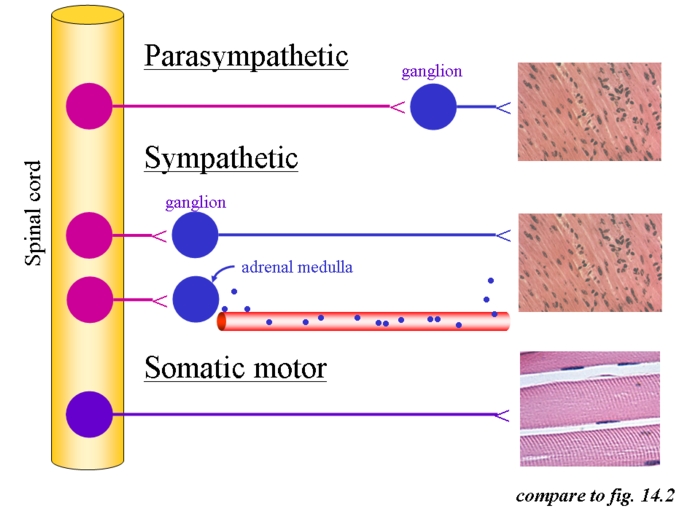
  • Compare and contrast the somatic and autonomic motor systems (motor pathways comparison)
  • Compare and contrast the two branches of the autonomic nervous system


Sensory systems

  • List the types of sensory receptors based on receptor distribution and modality of stimulus
  • Describe the receptors of your somatic senses and identify the modality of the stimulus that they transduce
  • List at least three examples of tactile receptors and describe their location and function
  • Describe the location and function of muscle spindles and Golgi tendon organs


Blood

  • Describe the structure of blood as a connective tissue (cells & specific matrix components)
  • List the four ABO blood types and identify the possible genotypes of people with each type
  • List the two Rh blood types
  • Define agglutination and differentiate it from clotting (coagulation)
  • Describe the composition of blood plasma and the formed elements of blood
  • Describe the structure of erythrocytes and offer at least three examples of how this structure is related to function
  • List the five types of leukocyte found in circulation and in order from most to least common
  • Describe blood cell and platelet formation in terms of the location in the body where it takes place, the two primary stem cell lines involved, and the circulating cells or formed elements that arise from each line
  • Identify appropriate transfusion matches based on ABO and Rh blood types (blood typing game)


Heart

  • List the two primary cardiovascular circuits and briefly identify the structures to which they deliver blood
  • List the four chambers of the heart
  • Describe the position of the heart within the thoracic cavity using appropriate anatomic terminology
  • Define bulk flow and describe how it is related to the cardiovascular system
  • Describe the pattern of flow through the two primary cardiovascular circuits
  • Describe the anatomy of the heart wall including the pericardium
  • Describe the gross anatomy of the heart including chambers, valves, and great vessels
  • Describe the structure and function of the cardiac skeleton
  • Describe the structure of cardiac muscle in detail
  • Describe the anatomy of the electroconductive system
  • Describe the coronary blood supply (right and left coronary arteries, cardiac veins, coronary sinus)
  • Describe the relationship of form to function in the heart at the organ, tissue, and cellular levels, using the information from the previous objectives


Vasculature

  • List the three major types of blood vessel in the order blood passes through them beginning at the heart
  • Describe the structure of the vascular system wall (layers of the vascular wall)
  • Compare and contrast the structure and function of the major vessel types
  • Compare and contrast the three types of capillaries in terms of structure and permeability
  • Given a general body region (head, neck, thorax, abdomen, arm, forearm, thigh, leg), name the arteries and veins on your "required lecture vessels" list that pass through that region


Respiratory system

  • List the major functions of the respiratory system
  • Describe the gross anatomy of the lungs including the pleurae and identify the five lung lobes
  • List the components of the upper respiratory tract in the order through which air passes during inspiration
  • List the components of the lower respiratory tract in the order through which air passes during inspiration
  • Describe the four phases of respiration and indicate the anatomical structures where they occur
  • Describe the gross anatomy of the structures of the upper respiratory tract and identify their epithelial linings
  • Describe the gross anatomy and histology of structures in the lower respiratory tract (layer arrangement in the respiratory system) including the trachea, bronchi, bronchioles, and alveoli (The bronchi and bronchiole links are from outside sites, illustrating differences in the wall structure. Boston University has another excellent example of respiratory histology. Choose any of the images and zoom in on the boxed areas.)
  • Identify the three components of the respiratory membrane
  • Trace the path of an oxygen molecule from atmospheric air through the respiratory tract and into the plasma; also be able to trace the pathway of a carbon dioxide molecule in the opposite direction.


Digestive system

  • List the structures of the GI tract in order from mouth to anus
  • List the accessory digestive organs
  • Name the serosal membranes of the abdominal cavity (visceral peritoneum, parietal peritoneum, greater omentum, lesser omentum, mesocolon, mesenteries proper) and describe their arrangement (see also this image)
  • Describe the histology and arrangement of the four major layers (tunics) of the GI tract wall (GI wall figure)
  • Distinguish between the esophagus, stomach, small intestine, colon, rectum, and anus in terms of their gross anatomy and histology (figure showing intestinal crypts, esophagus color unlabeled, esophagus B&W labeled)
  • Describe the gross anatomy and histology of the pancreas and liver
  • Describe the physical connection between the gallbladder and pancreas and the duodenum (cool endoscopic movies of the duodenum)
  • Trace the path of a food molecule through the GI tract including esophagus, stomach, duodenum, jejunum, ileum, colon, and anus, and all major divisions of each of these organs and the valves and sphincters separating them
  • Trace the path of bile or pancreatic juice from the site of origin to the lumen of the duodenum
  • Describe the relationship of form to function in the esophagus, stomach, small intestine, and large intestine
  • Trace the path of a food molecule in detail as it is absorbed from the gut, passes to the liver, and is delivered to body tissues (diagram of the pathway involved).


Urinary system

  • List the major organs of the urinary system and briefly describe their functions
  • List the general functions of the urinary system
  • Describe the gross anatomy of the kidney
  • Trace the path of a blood cell through the vasculature of the kidney from the aorta to the vena cava
  • Identify the parts of the nephron and describe their function
  • Describe the structure of the filtration membrane
  • Describe the typical histology of the renal cortex and medulla ("virtual slidebox" image of the kidney--explore!)
  • Describe the histology of the organs in the distal urinary system (ureters, urinary bladder, urethra) (urinary tract wall figure)
  • Trace the path urine takes as it leaves the nephron and ultimately exits the body
  • Trace the path of molecules that are filtered or secreted into the nephron, and subsequently reabsorbed or excreted


Reproductive system

  • Define homologue
  • Define gonad and gamete
  • Compare the roles of genes and hormones in sex determination and sexual differentiation (sex determination figure)
  • Identify homologies of male and female reproductive anatomy at the level of the external genitalia and internal ducts (internal ducts)
  • Compare and contrast the three major categories of gonadal cells in males and females (gonadal cells)
  • Trace the path of male and female gametes from gonads to the site of fertilization using the terms in this list
  • Describe the general mechanism of sex determination and sexual differentiation (e.g. How is human sex determined? What causes body and brain of males and females to appear different from one another?)